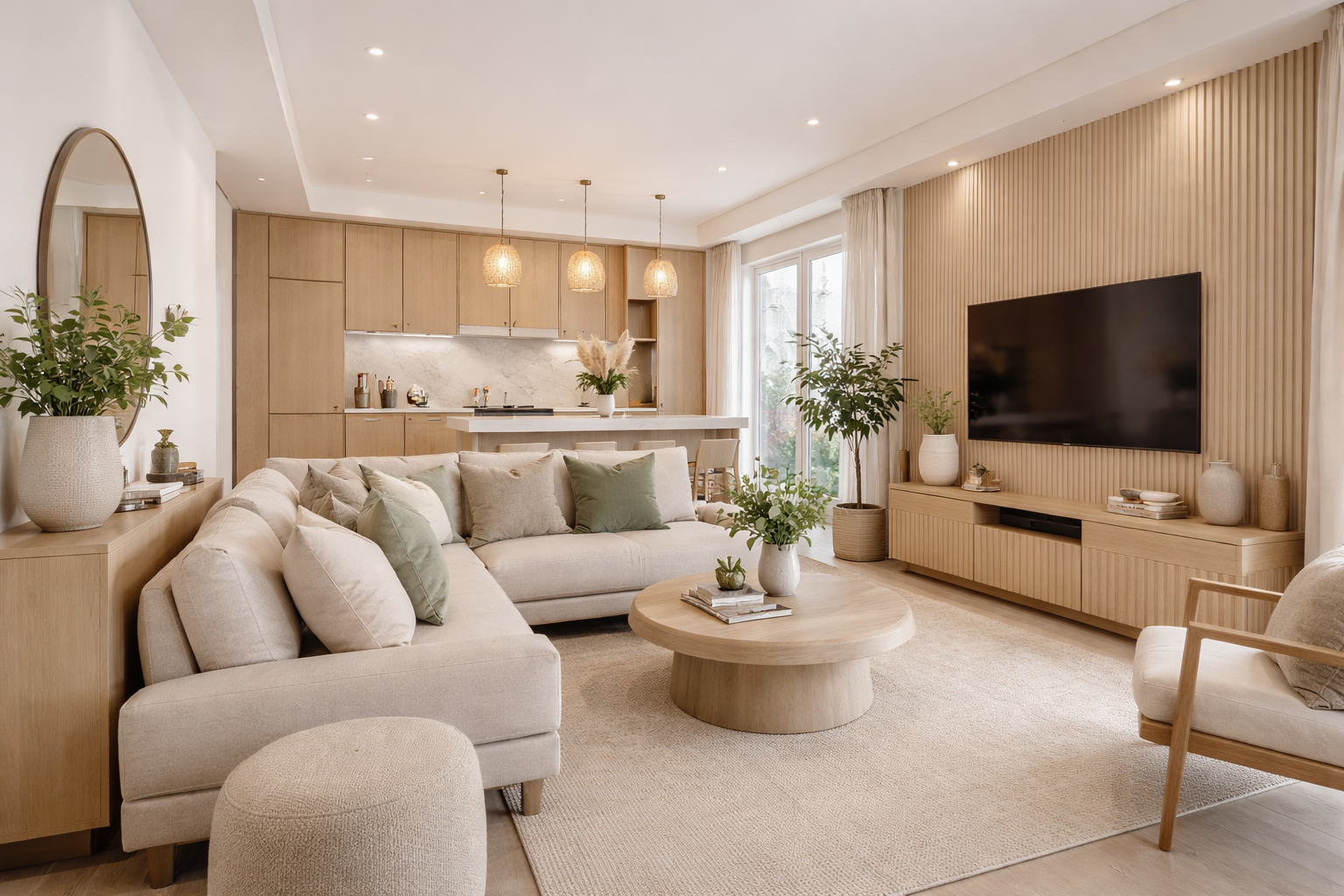
8 Budget-Friendly House Interior Design Ideas That Look Expensive
Designing a beautiful home doesn’t have to mean spending a fortune. With smart planning, creative choices, and thoughtful styling, you can achieve a stylish and functional interior without exceeding your budget. The key to budget-friendly house interior design is knowing where to invest and where to save.
Whether you’re designing a new home or refreshing your existing space, these 8 budget-friendly house interior design ideas will help you create a home that looks elegant, modern, and well-designed—without overspending.
1. Use a Neutral Color Palette as Your Base
Paint is one of the most affordable ways to transform a home. A neutral color palette instantly makes spaces look clean, spacious, and sophisticated.
Budget-friendly color choices include:
- Whites and off-whites
- Beige, greige, and soft taupe
- Light grey and warm pastels
Neutral walls allow you to change decor, furniture, and accessories over time without repainting. They also reflect light better, making rooms feel larger and brighter—especially important for small houses.
Tip: Instead of repainting all rooms, focus on the most-used spaces like the living room and bedrooms first.
2. Prioritise Key Areas, Not the Entire House at Once
One of the biggest budget mistakes homeowners make is trying to design the entire house at once. A smarter approach is to prioritise.
Start with:
- Living room
- Master bedroom
- Kitchen
These areas have the highest visual and functional impact. Once these spaces are complete, you can gradually upgrade other rooms as your budget allows. This phased approach helps maintain quality without financial pressure.
3. Choose Smart Furniture Over Expensive Custom Pieces
Custom furniture can be expensive. Instead, opt for ready-made or modular furniture that offers both style and functionality.
Budget-friendly furniture ideas:
- Modular sofas
- Beds with built-in storage
- Compact dining tables
- Open shelving units
Look for clean designs with neutral finishes that won’t go out of style. Multi-functional furniture reduces clutter and eliminates the need for additional storage units.
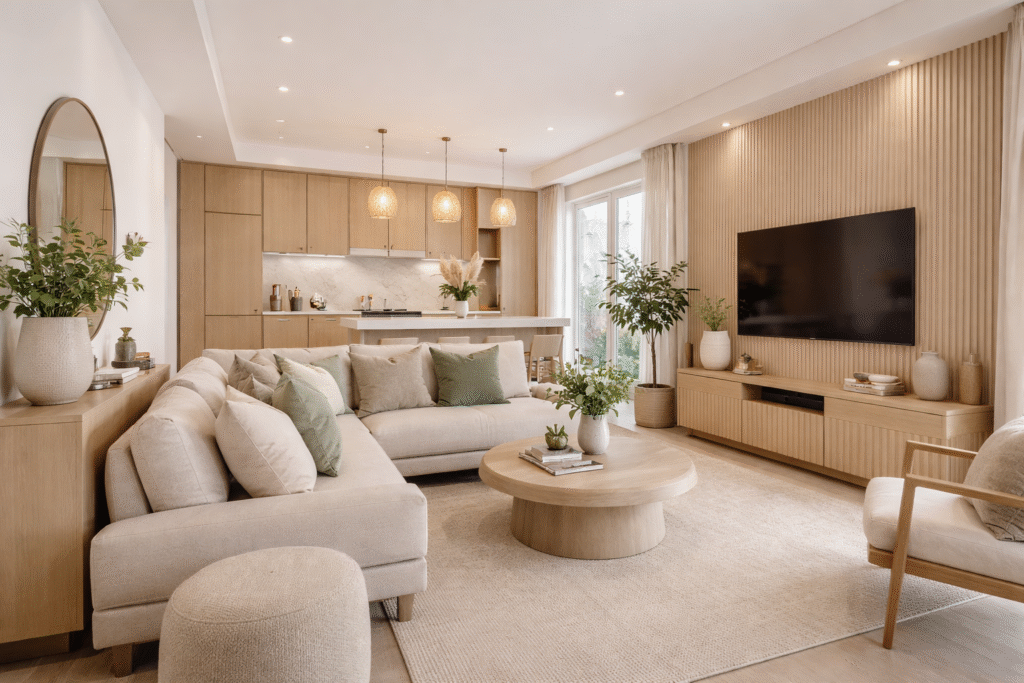
4. Focus on Lighting to Elevate the Interior
Good lighting can completely change the look of your house interior—even on a small budget.
Affordable lighting ideas include:
- Warm LED ceiling lights
- Wall-mounted lights instead of heavy chandeliers
- Floor or table lamps for corners
- LED strip lighting for shelves or wardrobes
Layered lighting creates depth and ambience, making even simple interiors feel premium and thoughtfully designed.
5. Use Wall Décor Instead of Structural Changes
Structural changes like wall removals or false ceilings can increase costs quickly. Instead, enhance walls using décor.
Budget-friendly wall décor ideas:
- Accent paint walls
- Wallpaper on one feature wall
- Wooden or MDF wall panels
- Mirrors to reflect light and create openness
- Minimal artwork or framed prints
Wall décor adds personality and style without heavy construction costs.
6. Upgrade Soft Furnishings for an Instant Refresh
Soft furnishings are one of the most cost-effective ways to elevate house interior design.
Focus on:
- Curtains and drapes
- Cushions and throws
- Rugs and carpets
- Bed linen and upholstery
Choosing coordinated colors and textures can instantly make your home look more polished. Even simple furniture looks high-end when paired with the right soft furnishings.
7. Keep Storage Simple and Functional
Over-designed storage units can inflate your budget. Instead, go for clean, functional storage solutions.
Smart storage ideas include:
- Open shelves
- Floating cabinets
- Wardrobes with simple shutter finishes
- Storage beds
Avoid excessive detailing. Simple designs are not only budget-friendly but also easier to maintain and timeless in appearance.
8. Add Greenery and Accessories Thoughtfully
Indoor plants and accessories bring life into interiors without costing much.
Affordable décor additions:
- Indoor plants or artificial greenery
- Ceramic vases and trays
- Candles and lamps
- Minimal décor objects
Instead of filling every corner, place décor thoughtfully. A few well-chosen accessories look far better than cluttered shelves.
How to Maintain a Budget Without Compromising Style
To stay within budget:
- Set a clear budget before starting
- Avoid last-minute design changes
- Reuse or refurbish existing furniture
- Invest more in essentials, save on décor
- Work with a clear design plan
Planning is the biggest money-saver in house interior design.
Why Budget-Friendly Interior Design Works Best
Budget-friendly interiors are:
- Easier to upgrade over time
- Less stressful financially
- More practical for everyday living
- Focused on function and comfort
A well-designed home is not about how much you spend, but how thoughtfully you design.
Conclusion
Creating a beautiful home doesn’t require an extravagant budget. With the right choices, planning, and creativity, budget-friendly house interior design can look just as stylish and comfortable as luxury interiors.
By focusing on smart furniture, neutral palettes, lighting, wall décor, and phased planning, you can design a home that feels elegant, functional, and truly yours—without overspending.
If you’re planning your home interiors on a budget, remember: simplicity, balance, and intention are your biggest design tools.
Leave a Reply